

Number Bonds
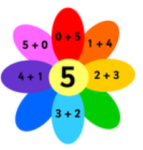
Secure knowledge of number bonds is an essential mathematical skill. As adults, we use number bonds all the time in our day-to-day life and secure knowledge of number bonds is vital when attempting harder calculations. At Thorpe, we teach number bonds in a variety of ways so that children are able to represent, use and “see” them independently in different applications.
Number bonds are often shown through representations. We particularly like Numicon, as a physical resource, as it allows the children to manipulate the number tiles to make the total bond. Other pictorial resources used in school include: tens frames, dienes, counters, cubes and other objects. For more information on these please refer to the calculation policy.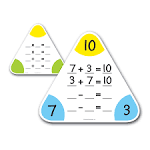
We also encourage children to make the connection between “fact families” where the addition and subtraction number sentences are linked. Moreover, it is useful to highlight the connection between number bonds to 10 with number bonds to 20 and to 100. For example,
1 + 9 = 10 1 + 19 = 20 10 + 90 = 100
Children will develop their understanding of number bonds through the Mastering Number programme, which begins in Reception and supports the development of strong number sense. Children will be assessed regularly, allowing teachers to identify and address any gaps in their knowledge and understanding.
Practising number bonds at home:
- Give your child ten objects (lego, counters, sweets etc.) and ask them questions such as: What do you add to 4 to make 10? If you have 3, how many more do you need to make 10?
- Write a list of numbers and see if your child can write the number bond pair for each number.