



Mastery Curriculum
What is the Mathematics Mastery Curriculum?
In 2014, a new National Curriculum was introduced. The contents and principles underpinning the mathematics curriculum are based on ‘mastery’. These reflect the teaching of mathematics in high performing education systems internationally, particularly those of east and south-east Asian countries such as Singapore, Japan, South Korea and China.
Mastering Maths means acquiring a deep, long-term, secure and adaptable understanding of the subject. There are certain principles and characteristics which characterise this approach. They are:
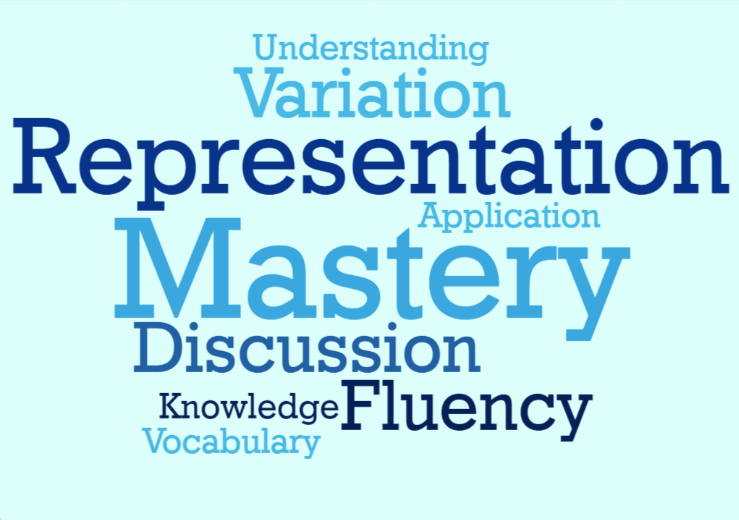 An expectation that all pupils are capable of achieving high standards in mathematics. The mastery approach rejects the idea that a large proportion of people ‘just can’t do maths’. Instead, all pupils are encouraged by the belief that by working hard at maths they can succeed.
- The majority of pupils progress through the curriculum content at the same pace. Challenge is through extending children’s thinking with rich and sophisticated problems rather than moving onto new content. Individualised support and interventions help to support those who need consolidation.
- Practice is a vital part of learning but it is with carefully designed variation (varying the way the concept or question is presented) to build fluency and understanding of mathematical concepts.
- Children are exposed to and are encouraged to use a range of representations (the way in which the maths is shown) to show deep understanding of a concept.
- Questioning and discussion play a vital role. Children are encouraged to think deeply about mathematics, identifying patterns and connections. This ensures deeper understanding than just memorising written methods.
- Children have a secure knowledge and recall of facts such as number bonds and times tables. This allows them the flexibility to move between different contexts.
Some people confuse mastery with Greater Depth. This is not the case, they are two very different things. All children in our school have access to a Mastery curriculum (Power Maths) which is based on the idea of ensuring all children have 'mastered' their Mathematics and secured a deepened understanding. Greater Depth refers to pupils who show a higher level of understanding for an area and are working above national expectations.